
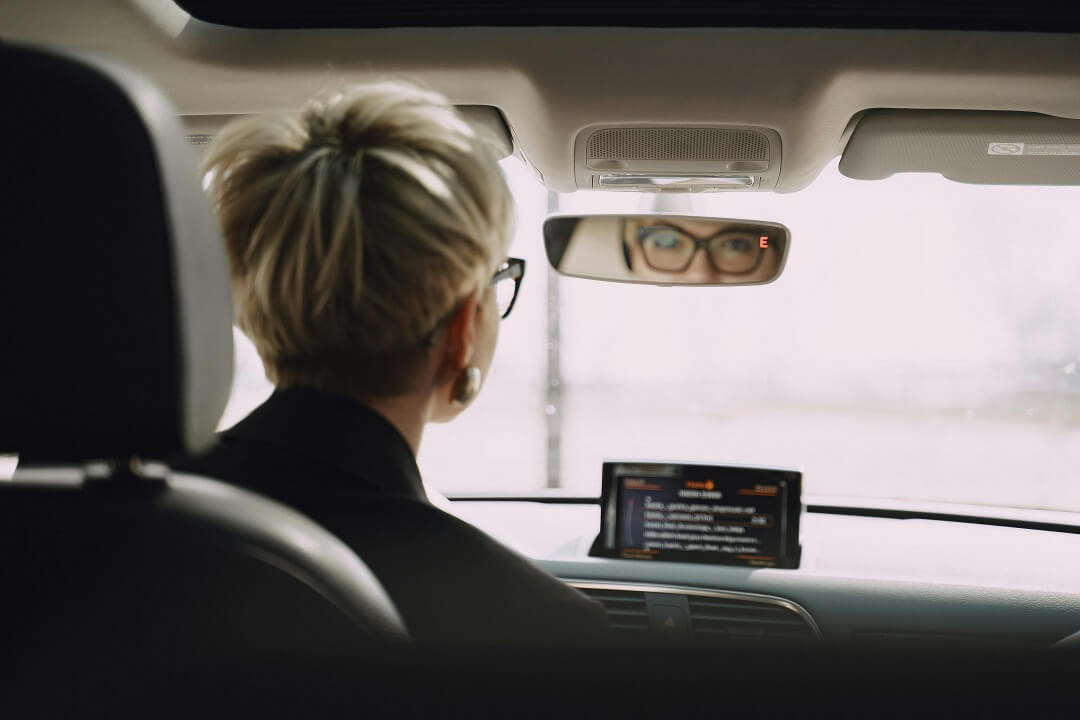
Best Lenses and Glasses for Safe Driving at Night
“Have you got yourself an iron horse? Then you should think about glasses for driving. For those who see well both day and night, a pair of sunglasses is enough. But if your vision is not perfect, you will have to choose optics to correct it.
lenses or glasses for driving
Drivers are required to have their cars inspected annually, and their own eyesight should be checked no less often. After all, prolonged and monotonous strain on the eyes, which includes driving a car, can negatively affect the condition of the visual apparatus, and sometimes this happens quite quickly.
Do I need to say that a “keep an eye” is the first thing for a driver?! It seems obvious! Not so! Talk to ophthalmologists, and your hair stands on end. It turns out that the majority of motorists who turn to them, who have far from perfect vision, do not think about the need to wear glasses.
Near-sighted drivers have somehow adapted, adjusted and feel quite confident behind the wheel, ignoring the fact that they have vision problems. But this confidence It’s deceptive, and you can pay dearly for it. For example, conditions such as retinal dystrophy, optic nerve damage, and, of course, refractive errors (even small ones) can lead to a deterioration in the ability to distinguish objects located at the side. The consequences of impaired peripheral vision while driving are clear to everyone without further ado.

Contrast sensitivity is also extremely important glasses for driving, allowing them to distinguish low-contrast images (for example, pedestrians at night), correctly determine the relative speed of all road users, etc. Many people experience difficulty driving at dusk or in fog. All these problems can be solved with properly fitted glasses or contact lenses.
Glasses or contacts?
Contact lenses are more comfortable. They produce less distortion than glasses for driving (especially with high diopters). Therefore, they are preferable for nearsighted people. In addition, any glasses limit peripheral vision, since they provide the greatest correction only when a person looks straight ahead, and not to the side.
Another convenience of contact lenses is that They’re always in the correct position, while glasses sometimes have to be adjusted, which can distract the driver at the most inopportune moment. And in the event of an injury, the risk of eye injury is also lower for a person wearing contact lenses than for a person wearing glasses for driving.
However, contact lenses also have their drawbacks. First and foremost, they are more expensive and more complex to care for (the exception being daily disposable lenses, which cannot be reused). Furthermore, with contactless vision correction (with glasses), there is no interaction between the lens and the cornea, which is especially important for people with dry eye syndrome, for whom wearing lenses can cause discomfort.
Furthermore, contact lenses should not be worn during illness (including a runny nose), or if you have conjunctivitis or keratitis. Another small but significant drawback is that on a clear, sunny day, contact lenses (even those with a UV filter) are still no substitute for sunglasses.
This is because lenses can only protect the inner part of the eye from the harmful effects of sunlight (including reflected and peripheral rays). The eyeball and surrounding skin remain unprotected. This is why drivers should also wear sunglasses when wearing contact lenses.
If glasses for driving, then which ones?
Prescribed by a doctor. Under no circumstances should you make this choice yourself. This is a matter for an ophthalmologist, whom you should definitely consult before getting your license and in the first few months after starting to drive. And then regularly, at least once a year.
With maximum correction. In everyday life, a person with visual impairments can afford not to wear glasses for driving at all or wear weaker lenses than required, but in a car, they need glasses that provide optimal vision.
They should fit well. Drivers should not have to constantly or occasionally adjust glasses for driving that slip down their nose—this distracts from the road and impairs vision. Therefore, it is important to choose frames with high-quality nose pads and a suitable size. Frame design is also important—the temples should be thin so as not to obstruct vision.
They should be made of durable material. Polymer lenses (plastic, fiberglass) are recommended glasses for driving, as they are lighter and unbreakable (the most durable materials are polycarbonate and various composite materials, such as Trivex).
Although polymer lenses may change their properties over time, their optical properties are comparable to those of glasses for driving lenses, which are prohibited for use by drivers. However, there are exceptions: the use of special technologies allows for the production of glass lenses that do not shatter into small pieces upon impact.
Clear lenses. Any tinted lens will block more light. Therefore, ideally, glasses should be clear. It should be noted that according to the international standard ISO 14889, lenses with light transmittance of less than 75% at night are not permitted for driving, regardless of their color.
Protectors and Saviors:
Today, you can buy glasses for drivers with special coatings offering various protective properties.
Anti-reflective coatings. These lenses transmit more light and help the eyes recover much more quickly from being dazzled by headlights. Therefore, they can significantly improve vision in poor visibility conditions. These coatings are typically applied to one or both surfaces of spectacle lenses. However, such glasses are only necessary for people with vision problems. Those with good vision don’t need to wear non-prescription spectacle lenses with anti-reflective coatings, as any lens reduces light transmission.
Polarized lenses
These effectively protect against both glare and reflected light. Polarizing filters are used on both prescription glasses and regular sunglasses, which are fine during the day but are absolutely unsuitable for driving at night or in low light.
Photochromic (“chameleon”) glasses. These change color depending on the lighting: they darken in the sun and become clear indoors. While they can be used while driving, it’s important to remember that a significant portion of ultraviolet radiation is blocked by the windshield, which reduces the sun protection effectiveness of such lenses.
Anti-headlight glasses (with yellow or yellow-orange lenses that block blue light) are also suitable glasses for driving at night and in cloudy weather, as they increase the contrast of the image. However, the most important thing glasses for driving at dusk is that night driving requires the most precise correction. In the dark, the pupil dilates, which significantly increases visual interference, and vision (especially contrast sensitivity) deteriorates.


